

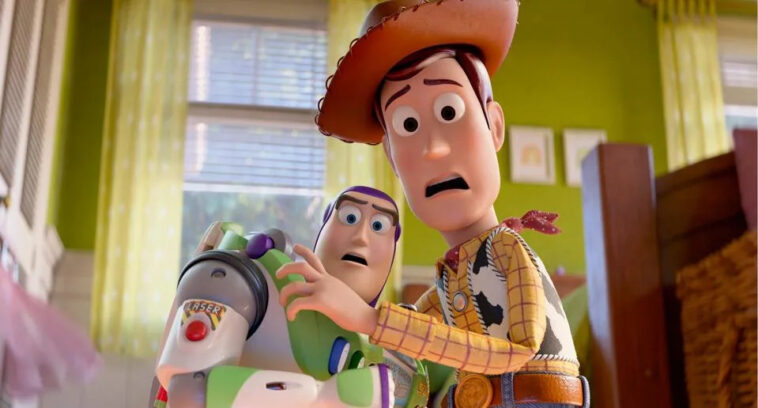
Pixar released Toy Story 5 in cinemas in the US and UK on June 19, 2026. The film centers on Bonnie, an eight-year-old girl voiced by Scarlett Spears, who feels lonelier after getting a new tablet called Lilypad, voiced by Greta Lee. Bonnie struggles to connect with friends both online and offline. Her parents must decide whether to let her use the tablet amid concerns about online abuse and isolation. They ultimately give her the tablet so she can join online games played by her dance classmates. This shift challenges traditional play.
Joan Cusack returns as Jessie, Bonnie’s favorite toy, joined by Tim Allen’s Buzz Lightyear and Tom Hanks’s Woody. The film also shows Woody living apart from humans, alongside Bo Peep, with signs of aging like a bald spot and a larger belly, a rare theme in the series. Jessie faces the challenge that digital devices pose to toys, highlighting the tension between screen time and traditional play. The story focuses on the toys’ fear that Bonnie’s growing use of technology will make them less important.
Toy Story 5 has divided opinions. On Rotten Tomatoes, it has a 93% critic score, the lowest in the franchise since the first film in 1995. Earlier films such as Toy Story 2 earned perfect 100% scores, and Toy Story 4 reached 97%. While 93% is still positive, some critics and fans see it as a decline. Most reviews praise the film for addressing relevant social issues but raise concerns about how well it was handled.
BBC’s review pointed to the film’s focus on childhood loneliness and parents’ worries about digital activity. Bonnie’s question, “Why won’t anyone be my friend?” is the emotional center, highlighting how technology affects her social life. This comes at a relevant time, as governments like the UK have banned social media for under-16s, echoing the film’s themes. BBC said the movie might upset parents because it shows the tough side of raising children in a digital world.
The Guardian noted that the film’s story is uneven and lacks the creativity and heart of earlier movies. It described Lilypad as almost a villain who sacrifices herself for Bonnie’s wellbeing. The review said the subplot with several Buzz Lightyear duplicates adds unnecessary confusion. Still, the film highlights the conflict between digital addiction and imaginative play, showing changes in how children interact with toys and technology. The Guardian also mentioned the franchise’s famous moment when Jessie sings “When She Loved Me,” linking it to this film’s themes of abandonment and growing up.
Yahoo! News said the high critic score might not meet audience expectations given the lower reception compared to earlier entries. The report highlighted Toy Story 5’s take on aging and technology, such as Woody’s physical changes, which adds a depth not common in family films. Critics described the movie as less funny and missing the energetic action scenes of earlier Toy Story films. Positive reviews noted its message about balancing screen time and face-to-face friendships.
Joan Cusack’s role as Jessie remains central to the movie’s emotional story. Jessie stands for the toys’ link to childhood imagination and their fight against digital devices. Cusack’s voice work keeps Jessie’s warmth and vulnerability. Her performance brings out the nostalgia for old-fashioned play, contrasting with the new digital challenges Bonnie and her family face.
Joan Cusack has had a long career in movies and TV, with roles in films like School of Rock and the Addams Family series. Toy Story adds to her voice acting work that connects with different generations. Her role in Toy Story 5 draws attention to how the franchise is changing with current social issues.
The film focuses on Bonnie’s loneliness as she uses technology to reach out to friends, reflecting wider talks about childhood development in a digital era. Bonnie’s parents’ struggle with screen time and online dangers reflects real family challenges today. Devices like Lilypad symbolize how technology can both link and isolate children.
Pixar cast prominent human characters alongside the toys, a change from earlier Toy Story films that mainly showed the toys’ secret lives. This human focus makes the story more emotional by showing both the toys’ fears and the human side of childhood loneliness and parenting in a world full of technology.
The release of Toy Story 5 has started conversations about technology’s role in children’s play and the mental health effects of digital socializing. The film does not fully reject technology, showing both its good and bad sides through characters such as devices with LCD screens. The story suggests that while technology can threaten traditional play, it can also create new ways to connect.
Toy Story 5 offers a detailed look at modern childhood through a well-known series. Though reviews are mixed, the movie raises questions about how digital technology affects youth loneliness and family life. Joan Cusack’s role as Jessie remains a key emotional link, connecting the new story to the franchise’s history of exploring growth, change, and the meaning of play.